How to Clean a Squishy: A Simple Step-by-Step Guide
A grubby squishy is a sticky squishy, and nobody enjoys squeezing fluff, crumbs and desk grime. Here is how to clean a squishy gently, and when to give up and replace it.
By Hannah Doyle · · 11 min read
Squishies pick up dirt fast. They live in bags, on desks, on sofas and, let's be honest, near biscuits. If you want to know how to clean a squishy without tearing the skin or ruining the shape, the short answer is: mild soap, lukewarm water, a soft cloth and plenty of patience.
This guide covers the steps in order, then a few checks that tell you whether a squishy is worth saving at all. We also flag what the UK and European authorities have said, because cleaning is a good moment to look at the toy properly.
What You Need Before You Clean a Squishy
You do not need anything fancy. Most of it is already in your kitchen or bathroom. The key rule is to keep everything gentle: the outer skin of a squishy is thin, and harsh products or rough scrubbing can crack it or leave it tacky.
A small bowl of lukewarm (not hot) water
A drop of mild washing-up liquid or baby shampoo
A soft cloth or microfibre towel
A soft toothbrush or cotton buds for crevices
A clean dry towel for patting dry
A plate or rack for air drying away from heat
Never use the microwave, a radiator, a hairdryer on hot or a warm car to dry or warm a squishy. Authorities including the French DGCCRF (10 August 2026) and the German Verbraucherzentrale (7 October 2026) warn that heated squishies can burst and cause burns.
Check the label first
If the packaging or a tag has care instructions, follow those over anything here. The manufacturer knows the material. Keep the pack if you can, since it also carries the age guidance and the UKCA or CE marking.
How to Clean a Squishy: Step by Step
Inspect it. Look for cracks, splits, leaks or a sticky film. If the skin is broken or something is leaking, stop here and read the section on when to bin it.
Wipe off loose dust. Use a dry soft cloth or a lint roller to lift fluff and hair before you add water. Wet fluff turns into stubborn grey smears.
Mix the cleaning water. Add one small drop of mild soap to a bowl of lukewarm water and stir until it is barely sudsy.
Dab, do not scrub. Dampen the cloth, wring it out well and wipe the surface in light strokes. Squeeze gently as you go so the cloth reaches the creases.
Tackle the stubborn bits. Use the soft toothbrush or a cotton bud for ridges, faces and seams. Short, light movements only.
Rinse with a clean damp cloth. Soap residue makes squishies feel slimy, so wipe over again with plain lukewarm water.
Pat dry. Press a clean towel against it, then leave it on a plate in the open air.
Let it air dry fully. Give it a few hours somewhere room temperature and out of direct sun. Do not seal it in a bag until it feels completely dry.
The whole job takes about ten minutes of actual effort. Most of the time is waiting for it to dry.
A quick note on dunking
Avoid soaking or submerging a squishy. Water can seep into seams, and some types hold on to moisture. A damp cloth does the job with far less risk.
Cleaning Different Types of Squishy
Not all squishies are built the same, so the method shifts a little depending on what you have. Check what yours is made of before you start.
Cleaning approach by squishy type
Type
Best method
Avoid
Drying
Foam squishy (slow rise)
Barely damp cloth, light dabbing
Soaking, as foam holds water
Air dry flat, several hours
Gel or liquid-filled
Damp cloth, gentle pressure
Squeezing hard, picking at seams
Pat dry, air dry
Dough or mouldable type
Dry wipe first, tiny amount of water
Wet hands, as it can go sticky
Air dry; store sealed once dry
Plush-covered
Spot clean with damp cloth
Full wash unless label says so
Air dry on a rack
Rubbery or PU skin
Mild soap, soft cloth
Alcohol wipes, harsh sprays
Air dry
Foam squishies
Foam sponges up liquid and takes ages to dry. Use a cloth that is only just damp, and blot rather than rub. If it gets properly wet, press gently with a towel and leave it somewhere airy.
Gel and liquid-filled squishies
These have a thin outer skin, so keep pressure light. A cloth wipe is plenty. If you see any leaking, do not keep cleaning it: the OPSS has reported a liquid-filled squishy with microbiological contamination above the permitted limit in its fill (report dated 10 August 2026), so a leaking one is best replaced.
Dough and mouldable types
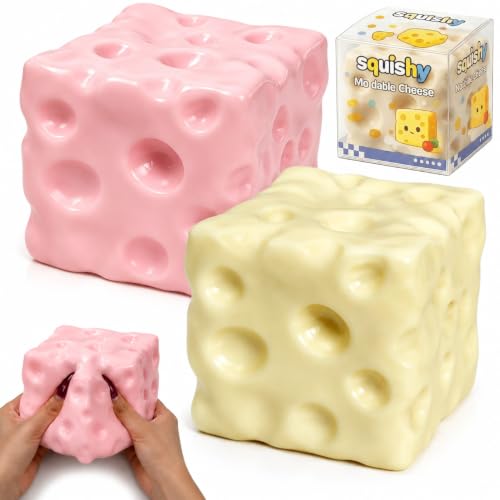
Our mouldable cheese squishies, like the pair below, pick up lint quickly because the surface stays soft. Wipe with a dry cloth first. If you must use water, use the tiniest amount and let it dry fully before shaping again.
Common Mistakes When You Clean a Squishy
Most damage happens because people try to do too much. Squishies are simple toys, and a lighter touch usually wins.
Using hot water. It can soften or warp the skin and leave a tacky finish.
Reaching for alcohol wipes or bleach. Strong chemicals can dry out or crack the surface.
Scrubbing hard. Thin skin tears, and gel types can split.
Putting it in the washing machine or dishwasher.
Drying it on a radiator, in the microwave or in a hot car. Burns and bursting are the reported risks.
Piling it away damp. Moisture in a closed bag invites musty smells.
Ignoring a strong chemical smell. A pong like petrol or solvent is a reason to stop using it.
Odd smell? Stiftung Warentest (26 September 2026) reported that Dutch authority NVWA found volatile organic compounds in squishies after complaints about chemical odours. If a squishy smells strange out of the packet, do not keep it going.
Do not open or cut it
Resist the urge to slice a squishy open to see inside, or to pierce it to drain gel. That releases the filling and is not worth it.
A Quick Cleaning Checklist and Schedule
How often you clean depends on how much it gets handled. A desk squishy that gets squeezed all day needs more attention than one that sits on a shelf.
How often to clean
How you use it
Light wipe
Proper clean
Daily desk fidget
Every few days
Every 2 weeks
Carried in a bag
Weekly
Every 2 to 3 weeks
Display or collection
Dust monthly
Every few months
Shared with others
After each session
Weekly
Five-point check after cleaning
No cracks, splits or tears in the skin
No leaking or sticky residue
Springs back (or holds shape, if it is a mouldable type) as it did before
No unusual chemical smell
Completely dry before storing
If it fails any of these, think about replacing it. A squishy that is split or leaking has done its job.
When to Bin Your Squishy Instead of Cleaning It
Cleaning will not rescue every squishy. Some problems are not about dirt. The authorities are fairly consistent here, so it is worth knowing the signals.
Visible cracks or tears, especially on gel or liquid-filled types. The DGCCRF advises stopping use of a cracked toy (10 August 2026).
Any leaking liquid or gel. The OPSS reported microbiological contamination in the liquid of one squishy, with a medium risk level (10 August 2026).
A persistent chemical or petrol-like smell, reported in NVWA complaints.
No maker or importer details and no UKCA or CE mark on the packaging. The OPSS flagged exactly this on a product refused at the border.
A cracked or crumbling outer layer that sheds bits. Pieces coming off are a choking risk for little ones.
Squishies are not for children under 3, according to the Verbraucherzentrale (7 October 2026). Check the age on the packaging, and keep damaged ones well away from small children and pets.
Where to report a problem
If you have a squishy you think is unsafe, you can contact Trading Standards through Citizens Advice or get in touch with the seller and manufacturer. Keep the packaging. For more on this topic, see are squishies safe and squishy recall notices.
What about burns?
Never heat a squishy. If someone is burned by a heated one, the Verbraucherzentrale advises cooling the area under cool running water for around 20 minutes, no ice, and seeing a doctor if the burn is deep or on the face.
Storing a Squishy So It Stays Clean
Good storage means less cleaning. A little thought goes a long way, especially if you have a few in rotation.
Keep them in a dry box or a breathable pouch rather than loose in a bag with keys and pens.
Store away from direct sunlight, radiators and car dashboards.
Separate dough-type squishies from foam ones so lint and residue do not transfer.
Keep different squishies from squashing each other; stacked weight can leave dents.
Wipe with a dry cloth before you pack one away.
Squishies you handle a lot
Our top tip: wash your hands before a long squeezing session. Clean hands mean a cleaner squishy, and it saves you from sticky fingers later. If you are curious about different styles, mochi squishy and slow rising squishies are good places to start.
We would not. The tumbling, heat and detergent can tear the skin, warp the shape or leave residue. A damp cloth with a drop of mild soap and lukewarm water is gentler and works for most types.
What is the best way to dry a squishy after cleaning?
Pat it with a clean towel, then air dry it at room temperature away from direct sun. Never use a radiator, microwave, hot hairdryer or warm car. Authorities such as the DGCCRF warn that heating a squishy can cause it to burst or burn.
How do I get rid of sticky residue on a squishy?
Wipe it with a damp cloth and a tiny drop of mild soap, then rinse with a clean damp cloth. Residue often means the surface is degrading, so if it stays tacky after a clean, think about replacing it. Avoid harsh solvents or alcohol.
Is it okay to use disinfectant wipes on a squishy?
We avoid them. Strong chemicals can dry out or crack the skin and leave a smell. Mild soap and water is enough for everyday grime. If you are worried about hygiene, replace a squishy that is leaking or damaged rather than trying to sterilise it.
How often should I clean my squishy?
For a daily desk fidget, a quick wipe every few days and a proper clean every couple of weeks works well. Squishies that are shared or carried in bags need cleaning more often. Display pieces only need a light dusting now and then.
When should I throw a squishy away?
Bin it if the skin is cracked or torn, if it leaks, if it sheds pieces, if it smells strongly of chemicals or petrol, or if it has no maker details and no UKCA or CE mark. Keep damaged ones away from young children, and check the packaging for age guidance.
Our selection
Firm collectable squish
mushykinz
MushyKinz Jelleez firm squish characters
Mochi
Listed size
8 cm
Handful-sized characters with a firm maltose squish and slow rebound, announced by the maker. A small soft cloth wipe suits it, and the compact size makes it easy to dust and display.
See pros and consWhat works
Compact, easy to wipe over
Collectable styles to display
What doesn’t
Style you get can vary
Good for Collectors who want a firm squish that is quick to tidy up.
Soft, non-rebound mouldable squishies in yellow and pink, announced as holding their shape after squeezing. They attract fluff, so a dry wipe before any water is the sensible first step.
See pros and consWhat works
Two in a pack, one for desk and one for bag
Quiet and smooth to handle
What doesn’t
Soft surface likely to collect lint
Good for Anyone who wants a good example of a mouldable type to practise gentle cleaning on.
A set of four colourful soft cubes announced as keeping their shape after repeated squeezing. Flat sides make them simple to wipe, and having four lets you rotate them while one dries.
See pros and consWhat works
Four cubes, so one can dry while you use another
Flat surfaces are easy to wipe
What doesn’t
Fiches for adults and kids vary, so check the age on the pack
Good for A multi-pack to practise a cleaning routine on and share around.
A soft PU foam novelty squishy announced as built for repeated squeezing. PU foam does not like being soaked, so use a barely damp cloth and let it air dry completely.
See pros and consWhat works
Light and pocket friendly
Smooth shape wipes down easily
What doesn’t
Foam should not be soaked
Good for A fun, simple example of a foam squishy that needs a light touch when cleaning.